




Description
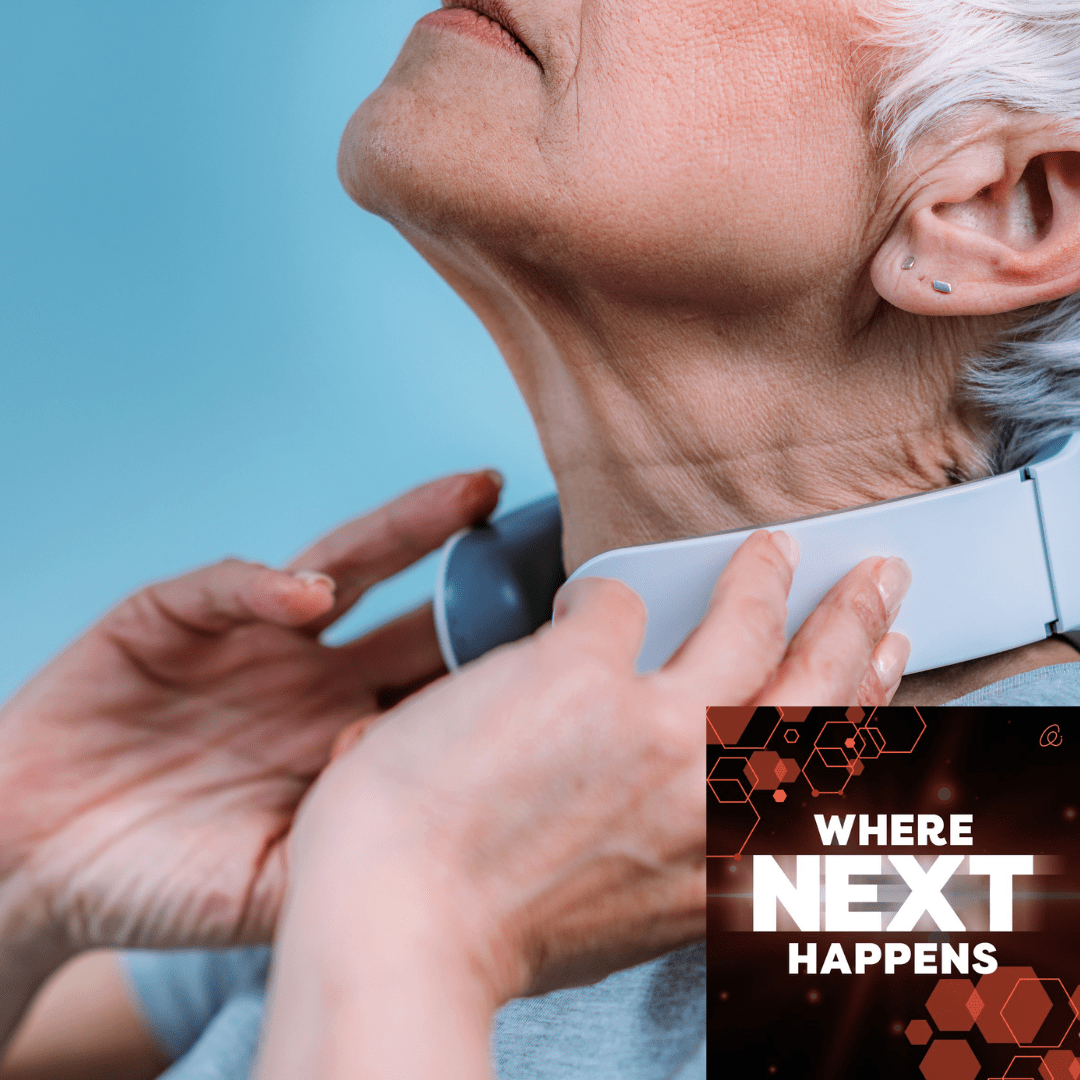
Ontario sees 1 in 6 hospitalizations involve sepsis—a critical condition where time and monitoring make all the difference. In this compelling episode, Dr. Claudia Krywiak sits down with Dr. Joe Eibl, co-founder of Flosonics Medical, creators of the FloPatch: the world’s first wearable, wireless ultrasound device for real-time, non-invasive blood flow monitoring in critically ill patients. Dr. Eibl shares the personal story that sparked this innovation, the challenges and strategies of bringing a breakthrough medical device to market, and what’s on the horizon for predictive, data-driven critical care.
spotify
Listen on Spotify, Apple Podcasts or wherever you get podcasts.
Transcript
Claudia Krywiak:
Every year in Ontario, 1 in 6 hospitalizations involve sepsis and 1 in 20 involve severe sepsis, which carries a much higher risk of death. Sepsis is the body’s extreme reaction to an infection. When the immune system goes into overdrive and starts damaging its own tissues and organs. It can strike anyone, often outside of a hospital, and progress incredibly fast, turning a routine infection into a life threatening emergency. Time is critical. Delays in understanding how a patient’s blood is flowing, or how they’re responding to treatment, can mean the difference between life and death. Yet in Ontario, hospitals face additional challenges. The province lacks sepsis specific policies and guidelines, and training for sepsis care is limited. Current monitoring tools like ultrasound machines are invasive, slow, and often require multiple staff, making rapid response difficult. So how can new technologies help clinicians respond faster and save more lives? Welcome to Where Next Happens, a podcast sharing stories of Ontario’s innovators and entrepreneurs. I’m Doctor Claudia Krywiak, president and CEO of the Ontario Centre of Innovation. Joining me today is Doctor Joe Eibl, co-founder of Flosonics Medical, a Sudbury based medtech startup that developed the Flow Patch, the world’s first wearable wireless ultrasound device for monitoring critically ill patients. Doctor Eibl leads the company’s technology, intellectual property and business strategy, helping clinicians get real time data when every second counts. Hi, Joe. It’s fantastic to have you here with us today. So why don’t we get started? I would love to hear about the origin story behind the Flosonics. What sparked the idea?
Joseph Eibl:
Yeah, thanks for having me, Claudia. And it’s, it’s a real privilege to be here. Flosonics, like, many, you know, startup story started long before the company was founded. I, attended the University of British Columbia in the early 2000. And my roommate, the guy I met on the first day of university, lived across the hall from me, came fast friends, and he ended up going on to a career in in medicine, trained at UBC, then U of T, then NYU, then out to Stanford, and he went into critical care medicine. And, you know, we stayed in touch and that’s probably a 15 year journey or some, some version of, you know, many, many years in the making. And my background was a little bit more on the science side, but similar grad studies post-doc. And then he was just started practice in New York and, my father fell ill, had a big heart attack, went into the hospital. Thankfully they were able to sort him out and he ended up getting, open heart surgery. Great news. He’s he’s doing fine today, but, post-surgery, he developed sepsis. Ended up becoming a very sick. He was in the hospital for three weeks, and during the process, he ended up getting 16L of fluid, intravenous fluid during his early resuscitation and sepsis. So, you know, it used to be the prevailing thought that aggressive fluid resuscitation was incredibly important in sepsis to help people with low venous return or a low blood pressure that comes from the inflammatory response to sepsis, to increase the volume in the system, increase venous return basically increase cardiac output, which refuses the vital organs, distributes antibiotics, and helps the patient heal. And that’s relatively correct in patients with a healthy heart. But like so many patients that come into the hospital with underlying cardiopulmonary pathologies like heart failure or in my dad’s case, just having his heart re-plumbed with the open heart surgery. He couldn’t handle that additional volume, end up getting fluid overloaded during the process. And I was talking to John. I’m not sure if you’ve seen somebody that’s in, overt fluid overload, but they look a lot like the Michelin man.
Claudia Krywiak:
Wow
Joseph Eibl:
If you, you know, the swollen, lungs get flooded with water, the heart gets congested, they end up on dialysis, very, very sick, very serious, increased morbidity, mortality. Like to stay in the hospital. So I was talking to John, who is my co-founder in Flosonics, my the guy that I was talking about from university about, you know, what was going on. You know, why was he so swollen? What was the challenge. And he said, hey, you know, like, this is something that we deal with all the time. It’s very complex. It’s very hard thing to manage. And we don’t have great tools to know if we’re doing the right thing or the wrong thing for our patient, but we do our best. And, you know, kind of put that away and, you know, went back to we’re back to the lab and back to work. A couple weeks later, my dad thankfully got discharged and went home. But, you know, stayed on, on my mind. And then a few months later, John called me up and said, hey, you know that thing that happened with your dad? A new paper came out, and I just had an idea for a device that I think would be really useful for emergency physicians, paramedics, people like myself that are managing these patients. It would be a wearable blood flow sensor that you could put over the patient’s carotid artery and jugular vein and help us understand what’s going on with the left and right heart without having to do an echo. And if we can make it a wearable, we can watch. Instead of holding an ultrasound probe and getting one picture a snapshot, we can use it and get a real time video or real time, monitor into how the patient’s heart’s responding at the bedside. And that would really change how I would manage patient care. That would tell me whether or not I’m doing the right thing for the patient. And in the case, like my father would have told me that, you know, fluids probably aren’t the right solution here. I should be looking at other medications or a different approach. That’s really what started the, the genesis of the, the company.
Claudia Krywiak:
That’s an incredible story that your co-founder, you met him when you were just starting out undergraduate, hundreds, thousands of students. Every September, they go into a residence and, they see who their roommates are or who’s across the hall. And in your case, it was a lasting relationship that started a journey that culminated in Flosonics, and especially just the experience that you went through with your dad and how that articulated the challenge that clinicians faced. So can you walk us through how the flow patch technology works, like from the moment it’s applied to a patient to when a clinician would get access to that, that data that you were talking about.
Joseph Eibl:
Yeah, sure. So so the goal of the technology is to use the carotid artery and the jugular vein as a window for the left side of the heart that’s coming out of it, and then the right side of the heart. What’s going back into it. And the way we do that is we have a ultrasound curtain. It’s about 2.5cm wide. Yeah. Kind of the width of a business card that goes into the patient’s neck and goes down about four centimeters. So deep enough that even patients with really big necks, you can get a really nice, sampling of both the blood flow going from the left heart to the brain and the blood flow going from the brain back into the right heart. And then, that that data gives you that classic blood flow signature that you’d see if you ever did a vascular ultrasound or if you’ve had the woosh woosh from, echocardiography. The same technology is just in a wearable form factor. So that that the patch, it’s about the size of, an Apple Watch sits right on top of the patient’s neck, and then you get a beautiful, beautiful signal of how blood flow is changing. And then that, from the patch using, low energy Bluetooth transmits the Doppler signal to, iOS devices. So currently, right now, iPad, iPod mini and iPhones, you can get, download the flosonics app and then be able to, in real time, see how blood flows changing. And you can imagine with that, platform or implementation, you can roll out, almost any clinical setting in the back of an ambulance and the home care setting and the emergency department operating room. And our end users are typically nurses or paramedics that are caring for patients, at the bedside. And then the care team, including the physician guiding the clinical course with either standing orders, algorithms or communication between the, the nursing team and the physician who’s caring for the patient.
Claudia Krywiak:
So is this technology currently in use in hospitals in Canada, in North America?
Joseph Eibl:
Yeah. To date, we’ve been on over 7300 patients. we’ve got Health Canada clearance, FDA clearance, CE mark, about 20 hospitals in North America right now and growing really great clinical adoption and nurses. Physicians have loved using it. It gives insights that you haven’t had or you’ve had to work really hard for before using either invasive technologies or complex ultrasound workflows turns it into push buttons, simple peel and stick ultrasound. So it’s really taking the learning curve down to a very, very easy level where a first time user is able to go to the supply closet, grab the floor pouch, put it on the patient, connect to an app, and get the data that they need to make a clinical decision.
Claudia Krywiak:
So congratulations on on getting this technology into healthcare settings because that’s no easy feat, especially in Canada and in Ontario specifically getting new and innovative technologies adopted by our health care system. There are quite a few challenges and barriers. Can you talk a little bit about that from the perspective of someone who has gone through the process, and what guidance or advice would which you give to other entrepreneurs that have medical devices and they’re targeting getting those into our health care system.
Joseph Eibl:
Yeah, it’s a it’s a great question. And it’s also a really interesting one in that, you know, if I, if I went back ten years or, you know, even five years ago, I would have thought that having the right clinical information for the physician or the nurse at the bedside to make a decision would be the primary driver of technology adoption. And I think that’s that’s more a table stakes than, you know, it has to do that. But on its own, that’s not sufficient to get technology adopted in the health care market. There also has to be a business model that’s compatible with the funding mechanism of the care pathway for that individual. And if you think about US market, the Canadian market, it depends, you know, a different funding model. If the patients at a primary care clinic, if they’re in the emergency department or if they’re admitted to hospital, and the the funding mechanisms for each of those are different. And they’re different between Canada and the US. And the documentation that you need, the workflow that you need, the user experience that you need, the target of where that patient ultimately ends up can impact the reimbursement. So there’s a whole other set of engineering that you need to do while you’re developing the technology. That has nothing to do with PCBs or acoustics or any physical engineering. It’s understanding that health care system, the patient journey, how the reimbursement works and how you’re going to fit into that landscape without having to invent a new reimbursement model if you can really deeply understand how the patients cared for, where the reimbursement comes from. Who’s accountable and responsible for the outcomes of those patients? What do they care about, and what are the key performance indicators that they’re being held accountable to? It can help you develop a business model reporting structure, a documentation pathway that can really help them have an easier time with, you know, what they’re responsible for. And that really opens up the aperture for folks that are willing to adopt the technology. So I know that’s long winded, but it’s a it’s a really important insight that you can’t start too early because it really does inform product design and data from the technology that you’re building.
Claudia Krywiak:
So right from the outset, these are things you need to be thinking about. And presumably as as you build out your team, you need to build in that type of expertise from the earliest stages. It’s it’s not just about the technology, but it’s also about, as you say, the business model and being able to navigate, the, the system and also being able to navigate reimbursement.
Joseph Eibl:
For sure and then to that point, reimbursement, you can, depending on what the the application is, you know, you may have to start 2 or 3 years before you enter market working towards a code for reimbursement.
Claudia Krywiak:
That’s a long process.
Joseph Eibl:
But it’s something that you you can start in parallel with your technology or your technology development and your regulatory applications. And you know that all of what I just said transposed us through new market entry into Europe and to Japan and to China. So all of them have their own uniqueness. And I think the part that I didn’t fully appreciate when I started the company is before you go to commercialization, there’s a step that’s called, some folks have called it market access where it’s, you know, really mapping out this component of the business model and validating that it works, that it holds that that the customer sees it the same way you do, that the payer sees it the same way you do, and that the technology meets the need. That’s the market is is looking for.
Claudia Krywiak:
So one can infer from that that developing a medical device like flo patch requires significant investment. So how did you go about securing funding and bringing investors on board to to support the commercialization of this device?
Joseph Eibl:
It’s an incredibly important consideration right out of the gate. I was talking to a colleague last week about it. And for medical technologies, hardware in general, but specifically medical technologies in a regulated environment. It’s not something that unless you’re incredibly wealthy Going into it, you know, it’s not something that you can bootstrap or just kind of build revenue to get through. Like building the technology itself is a multi-million dollar, multi year, multi human year, endeavor. And if you think about the the cost required with that, there is a certainly a real need for institutional support. So not to say that that folks haven’t been able to do it other ways, but my view early on was that we were going to require some, medtech focused investors. So our first round of capital, I would call friends and family and, we used that to kind of build a prototype, get through, you know, before the quality systems, before the, you know, becoming a real company per se. But just to get the the proof points and kind of de-risk the question, like, could you do it? so we did that as step one and then we raised a our first, I guess you call it A round with a Genesis Capital and Eigen Partners here in Toronto, both the top tier early stage medtech VCs. Both have been amazing to work with, incredibly supportive of the company, high value through both network and resourcing governance. You know, we became a much, much better company for having been involved with, with both of those, firms. We then went on to use that round of funding to build the technology and get FDA clearance. Once that was done, we did a second round of financing for the market Access Early Commercialization that was led by a USVC Arboretum Ventures. Again, it’s like bringing a new a new teammate onto your team that’s, you know, better and smarter than you in different ways, and you continue to get better. so Arboretum, led letters series B, and that was to get that early commercial market access stage done. And then more recently, new investor, newly venture partners, joined our syndicate. And they’re a Bay area digital health, medical device firm. And again, a new set of expertise, joining that around the commercialization of digital technologies. So a really, really great investors, tremendous support from our board.
Claudia Krywiak:
And good representation of, I would say Canadian investors as well, which is not something that you, often see in this, in this space, especially at the later stages.
Joseph Eibl:
Yeah, I think that’s an area that the the entire industry has been looking to solve. I hope, I hope we’re moving in that direction is, you know, establishing some later stage medtech VC for Canada. And there are firms that do it as they’re just far, far few between. And you know, like, everything, there’s so many different factors that come into play that we’d probably need ten x of them to satisfy the number of opportunities that are, around. And at the same time, you know, having fewer of them. Also, it requires companies like ours to be very, capital efficient and, you know, find the right, right timing to intersect with them. So that’s a bit of, serendipity, a bit of strategy and a bit of timing.
Claudia Krywiak:
So what was the timeline for for kind of you’ve kind of outlined the pre-seed financing. Then moving on to series, series A and then your successful series B, just to give our listeners a sense of like, how long does that take? And those milestones.
Joseph Eibl:
Yeah so for context I’m a first time founder, and I’d probably do it differently if if I was doing it again with hindsight. Not that I don’t think that we did it wrong just differently.
Claudia Krywiak:
How would you. That’s interesting. How would you do it differently?
Joseph Eibl:
Yeah. Why don’t. Maybe I can walk you through the the phases and that we can we can kind of think about what? You know, what an alternate future, or an alternate timeline kind of look like. But we did our A round or sorry our friends and family, around seed, around in 2016 20. End of 2017 was their series that was, $4 million US, around 5 million Canadian. That took us to the start of Covid. And then Covid was kind of a I’d call it, you know, probably a two year delay, just because we’re at the spot where we needed to get into hospitals, do clinical validation work. And, you know, during the Covid timeline, access to hospitals was very pretty, well, impossible for great Canadian companies. Kind of end of 21 We did the series B. That was when things started opening up and you could get back into hospitals. And then in 24 we did the series C, so we’re kind of halfway through that series C, funding. And then the next one will be a growth round of capital for, continued expansion.
Claudia Krywiak:
And so how would you have in an alternate universe? How would you do it differently?
Joseph Eibl:
I mean, initially had the first round of capital, we were very capital efficient, like incredibly capital efficient. And we, prioritized milestones over time to market. And I think one of the things that I’ve learned is time to market is incredibly important on the investor side and time to market on the revenue ramp, once you turn to commercial, is the other metric that’s incredibly important. And not that we’ve done a bad job of it, but somebody one of my board members, when they joined the board. With this last round of financing, you kind of sat me down and said, you like like what you’ve done is, you know, a great job doing it as capital efficient as you have is. Like, I wouldn’t have imagined that you could get to the stage with the level of capital that’s that’s been invested. That’s fantastic. But now you’re moving into commercial and you, instead of optimizing for milestones, should be thinking about optimizing for momentum. And those are two very different, things. One’s don’t run out of gas. The other is how fast can you get going?
Claudia Krywiak:
Yeah. Yeah
Joseph Eibl:
And you know, they’re kind of different strategies. So I think, you know, having the context of switching from the milestone or to being okay, you know, I’m okay spending more money faster because get us where I’m going.
Claudia Krywiak:
To drive growth
Joseph Eibl:
Growth sooner. Growth is, would be kind of the, you know, Yeah. If I was doing it again, a place where I think I could have, probably made some different decisions sooner that would have got us, further down field. And, you know, who knows? You can’t you can’t go backwards. But, you know, I think it definitely some perspective and learning.
Claudia Krywiak:
That, That’s a great, great insight. Thank you for sharing that. I think it’s something that, especially given the current environment in terms of fundraising and investment that we are in right now, a lot of companies are probably struggling with that. The, you know, capital efficiency and runway and conserving cash and then also fueling growth, and, and, and momentum. So it’s a tough time for, for for that. So flo patch is already being adopted in hospitals across Canada and the US. Can you share some of the feedback that you’ve heard. Like are there any stories where Flo Patch has made a significant difference in patient care that you can share with us?
Joseph Eibl:
Oh man, there’s there’s so many. Maybe I could share one that’s, that’s kind of close to my heart. It’s it’s it’s a bit of a, a sad story as well, but it was when we first got our, our initial prototype working, maybe 2019. We’re really excited. You know, there’s a first device that we had end to end that was fully functional. We were going to a conference to to show it off. so actually one of the informed conferences in, and it was in Boston that year and our team had got an Airbnb and we were sitting up on the, the little terrace, outside of the, the house. And we were doing dry run demos with it. And, there’s four founders in the company that was myself, John, who I mentioned earlier. And then when we started the company, I had a science background. John was a clinician, and then my brother had a accounting background. And we’ve we’ve always worked really well together. So he was he was, you know, right, right out of the gates. And then he had a finance roommate from university as well that he really respected that, that we all founded the company together while we were sitting around the, the terrace passing the the prototype around and taking readings, I put it on, it sounded normal. And then my brother put it on, it sounded normal, and John put it on, it sounded normal. And we put it on our our fourth, fourth co-founders his name is Sachit and it sounded very different.
Claudia Krywiak:
Oh.
Joseph Eibl:
Heart rate of 140. And this is a 31 year old guy at the time. And, we looked at each other, it’s like, oh, man, that doesn’t sound good. I gotta get checked out. And, unfortunately. And he was diagnosed with leukemia and ended up passing away, 18 months later. Very, very aggressive. Terrible.
Claudia Krywiak:
Oh my goodness.
Joseph Eibl:
Tragic, but just an absolute. Absolute incredible human being, but like an incredible co-founder, somebody that, you know, you, you work closely with every day for, for years and years. It’s one of those, you know, people, Italian startups that you can never predict where you’re your hurdle or your roadblock comes from. And you think, like, we’ve been out of ten years now and, you know, losing a co-founder, is is one that I wouldn’t have bet on. Unfortunately, there was nothing you could do about it. But, you know, in other instances, we’ve, we have, identified cardiac pathologies that are intervenible and have led to an intervention that’s prolonged, reduced heart attack risk for a long life. But our main clinical use cases in, in sepsis, severe sepsis, care pathway. So if you go into, any Sutter hospital or any, Sinai hospital or any Bay area hospital in California, chances are, and you’re going into sepsis. Chances are you’ll get a flow patch on that from the time that you enter the hospital. Help guide your fluid resuscitation from the time you get in, through your discharge from the intensive care unit. And the benefit to that is reducing the chances that you’ll get an episode of fluid overload. Like what happened to my my father with his post-surgical sepsis. So it gets you out of the hospital sooner, reduces your chance. 28 day mortality reduces the cost of care for the hospital, identifies other potential comorbidities that are happening at the same time, and helps manage through the things like heart failure. So, really, really impactful for the patients that it’s treating.
Claudia Krywiak:
And literally that could make the difference between life or death in terms of, patient, patient outcomes.
Joseph Eibl:
Yeah. For sure.
Claudia Krywiak:
So what’s next for innovation in critical care monitoring? Do you think Flo Patch is at the leading edge? What’s next? What’s at the leading edge?
Joseph Eibl:
Yeah, I think it’s, you know, a convergence of different macro factors. So, you know, one is hospital to home and you hear that a lot. But it’s being able to provide higher quality of care more acutely ill patients in less resource intensive settings. So that’s something that, you know, wearables enable. It’s something that non-invasive technologies enable. It’s something that fast and easy to use solutions promote. So I think that’s, you know, that’s one theme that we’re seeing across critical care that is, you know, technology is advancing. And I think we fit squarely into that, that macro environment or that macro trend. Pardon me. The other is, is wireless and, you know, kind of fits with noninvasive. But the idea that, you know, if you’ve been in an ICU was just cables everywhere, wires everywhere, tubes everywhere. And when we show the nurse or the doctor for the first time that we’ve got a device that doesn’t have wires, like, oh my God, you know what? Why is everything like this? And I think there will be a move. As you know, wireless radios become more and more robust. I think, you know, the Bluetooth fallouts that I have now are a hundred times less than they were when Bluetooth first came out ten, 15 years ago. Right. So it’s just, you know, technology is becoming better and better. And as you get into, you know, the medical setting, the robustness of that solution needs to be there. So I think that trend is something that you’ll see more and more of, like a move towards a wireless hospital room or intensive care unit. And then the third one that that we’re really focused on right now is predictive monitoring. So with the blood flow, or same thing with if you’re listening to a stethoscope the same way a doctor can pick up a trained doctor, it can pick up cardiac murmurs or valve dysfunctions through a stethoscope, a lot of a lot of, hemodynamic, pathologies or diseases manifest in the way that blood flows. So, we’re seeing that, very, very clearly, things like aortic stenosis, carotid stenosis, life threatening organ dysfunction, patients that are in hemorrhage, you can, if you know what you’re looking for in the blood flow profile, you can see it. And anything that you can see visually, you can, imagine a very clear way to develop machine learning or algorithms.
Claudia Krywiak:
Okay. I was just going to say so predictive analytics that’s AI. So AI is and machine learning are a big deal in this space.
Joseph Eibl:
Yeah yeah for sure for sure.
Claudia Krywiak:
And has that changed the type of talent that you’re looking to attract as you scale and grow?
Joseph Eibl:
I mean, it definitely informs it. I don’t know that. You know, it’s it’s something that we, we’ve been, you know, front and center for the past ten years for us. You know, we’ve been thinking about it since we started the company. But the, the talent pool has certainly grown. And the types of folks and the experience that they have that’s transferable to what we’re doing is certainly increased as well. So I think it’s, you know, it’s on trend. It’s something that’s developing. And one of our angel investors was a world renowned data scientist, has done all sorts of of groundbreaking AI activities out of the Bay area. And when he was investing in the company. So, like, I get what you guys are doing right out of the gate, you know, really, really focus on data collection. But all of the other stuff will figure that out by just high quality data is what we need. And we’ve really built a robust back end into our data collection infrastructure from the start, so that every beat that’s ever come out of a flow patch has been captured in a cloud, at least sampling data know no patient identifying information, but all of the hemodynamics and, you know, ones and zeros from the sensor have been caught. So with the with the right accompanying data, we can make some really sophisticated inferences from the flow patch data to be able to inform clinical management.
Claudia Krywiak:
So your moat isn’t just the intellectual property that you have, it’s also the proprietary and unique data that really distinguishes your Flosonics.
Joseph Eibl:
Yeah I think, the last I checked, I believe we had something like 6 or 7 million, somewhere between 6 and 7 million unique labeled pulses or heartbeats from from Flo patch. So, you know, definitely enough to, to make a dent.
Claudia Krywiak:
And I think that’s something that’s changing for medical device companies specifically. It’s it’s not only the, the the deep tech and the device, but increasingly it’s the data and the very unique, data that the technology and the hardware enables. Well, congratulations on everything you’ve been able to accomplish with Flosonics, but especially the impact. in, just under ten years. This technology came from an idea to be deployed in hospitals across North America, and it is literally saving lives every single day. So it’s our pleasure and privilege at OCI to have been able to support you and FloSonics along the way. And it’s a fantastic journey. Thank you for sharing it with us.
Joseph Eibl:
Thank you so much, and I really appreciate all the support along the way from OCI and a number of other funding agencies that have supported us. But, you know, being part of the Canadian ecosystem and the support that we get to develop technologies is really world class, and it makes a big difference for our ability to compete internationally. So thank you and thanks to everyone else for, their, their attention and their interest today.
Claudia Krywiak:
Awesome. Thank you. That’s it for this episode of Where Next Happens. To learn more about Flo Patch and Doctor Joe Eibl’s work at Flosonics Medical visit Flosonicsmedical.com. Where Next Happens is produced by the Ontario Center of Innovation. This episode was produced by Jasmine Rach, edited by Gaetan Harris. Amanda Cupido is the executive producer and I’m your host Doctor Claudia Krywiak. Ready to take your idea to the next level? The Ontario Center of Innovation helps innovators access the funding, mentorship and resources they need to drive the future forward. Visit OC-Innovation.ca/podcast to learn more.
In Where Next Happens, your host, Dr. Claudia Krywiak will peel back the layers with some of Ontario’s greatest innovators and discuss the challenges and triumphs dominating the innovation ecosystem across the province.
Subscribe for program updates & more
Subscribe and receive updates on programs, events and Ontario’s innovation news right to your inbox